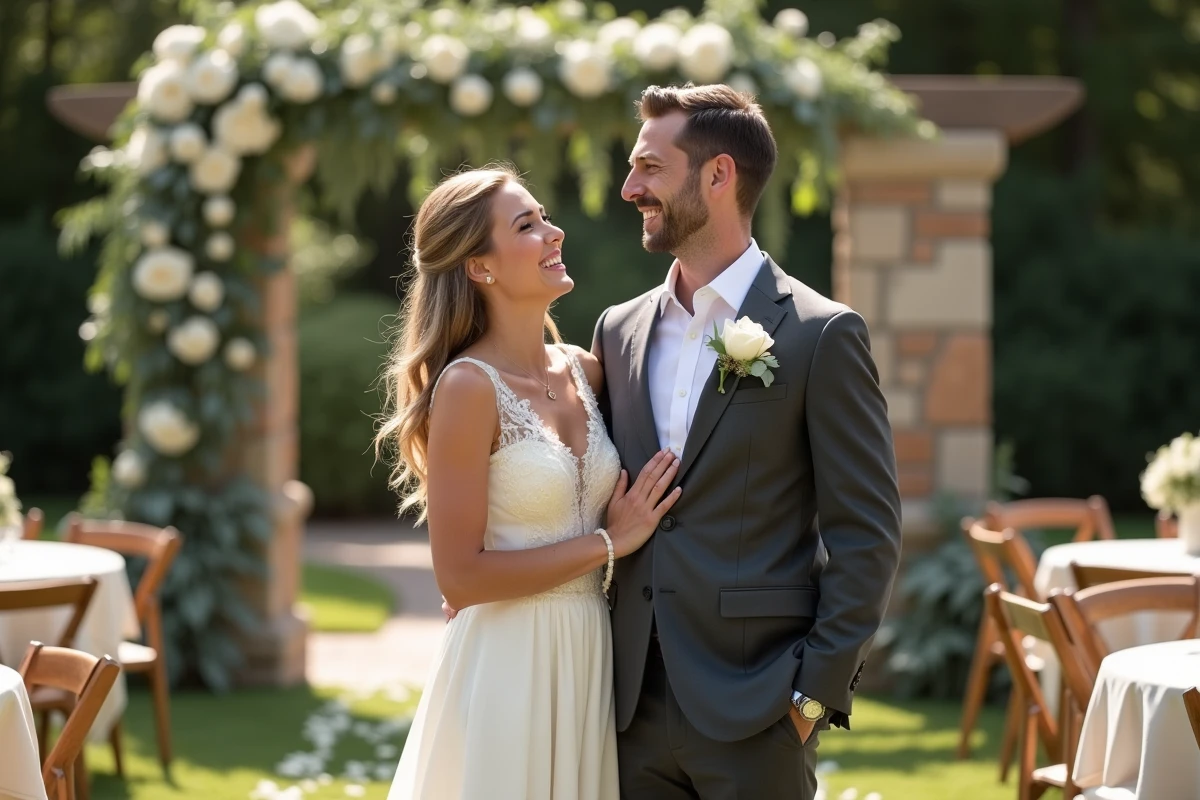
An unforgettable wedding does not rely on an extravagant budget or an endless list of vendors. What distinguishes a memorable celebration from a conventional reception often comes down to a few key decisions made early in the planning: the format of the day, the coherence between the venue and the number of guests, and the ability to forgo certain elements to enhance others.
Two-Part Wedding: The Rising Format in Response to Inflation
Since 2023, a trend has emerged in France: the two-part wedding. The ceremony and dinner bring together a small circle, followed by an expanded evening or next-day brunch that welcomes a larger group. This division addresses a concrete constraint: the rising costs of catering and venue rental push couples to choose between the quantity of guests and the quality of the experience.
The principle is simple. Instead of spreading the budget thin over a hundred covers with a standard menu, the couple focuses their resources on a carefully prepared meal for a few dozen close ones. The rest of the guests join the celebration at a time when the costs per person are significantly lower (cocktail, cold buffet, brunch).
This format offers an often-underestimated organizational advantage: two distinct atmospheres in one day. The dinner can be intimate, with table service and lengthy speeches. The open evening, on the other hand, becomes festive and relaxed. Couples planning their reception on the Rêve 2 Mariage website find this logic of personalized sequences, with inspirations tailored to each part of the day.
Wedding Carbon Footprint: An Aspect Ignored by Traditional Guides
Decorating with recycled materials or wearing a second-hand wedding dress are visible gestures, often cited. The carbon dimension of a wedding goes far beyond that.
Since 2024, couples have been calculating and then offsetting the overall carbon footprint of their celebration, including guest transportation. This logistical aspect often represents the heaviest part of the environmental impact, far ahead of decoration or catering. Specialized providers or NGOs offer detailed calculations and compensation programs.
Some couples incorporate this approach directly into their ceremony speech or on their wedding website. Displaying the estimated footprint and the actions taken becomes an act of transparency towards guests, not just a decorative argument.
Concrete Points for a Low-Impact Wedding
- Choose a reception venue accessible by public transport for the majority of guests, rather than an isolated estate that requires everyone to drive
- Favor a local caterer whose sourcing does not exceed the regional perimeter, which reduces food miles and simplifies day-of logistics
- Offer an organized carpooling system with a tool for connecting guests, directly on the wedding website
Coherence Between Venue and Guest List: The Decision That Changes Everything
The choice of reception venue often precedes the finalization of the guest list. This sequence poses a problem: a venue that is too large for the actual number of guests creates a cold atmosphere, while a space that is too tight generates discomfort from the cocktail hour onward.
The right method is to stabilize a guest range before visiting any venue. The range should be honest: count the likely confirmations, not just courtesy invitations. A room designed to comfortably accommodate the actual group creates a warm atmosphere without additional decoration effort.
Wedding Budget: Concentrate Rather Than Spread
A common reflex is to check off all the items on the classic planning timeline (DJ, photographer, videographer, florist, wedding cake, entertainment). The result: each item receives a modest budget, and none stands out.
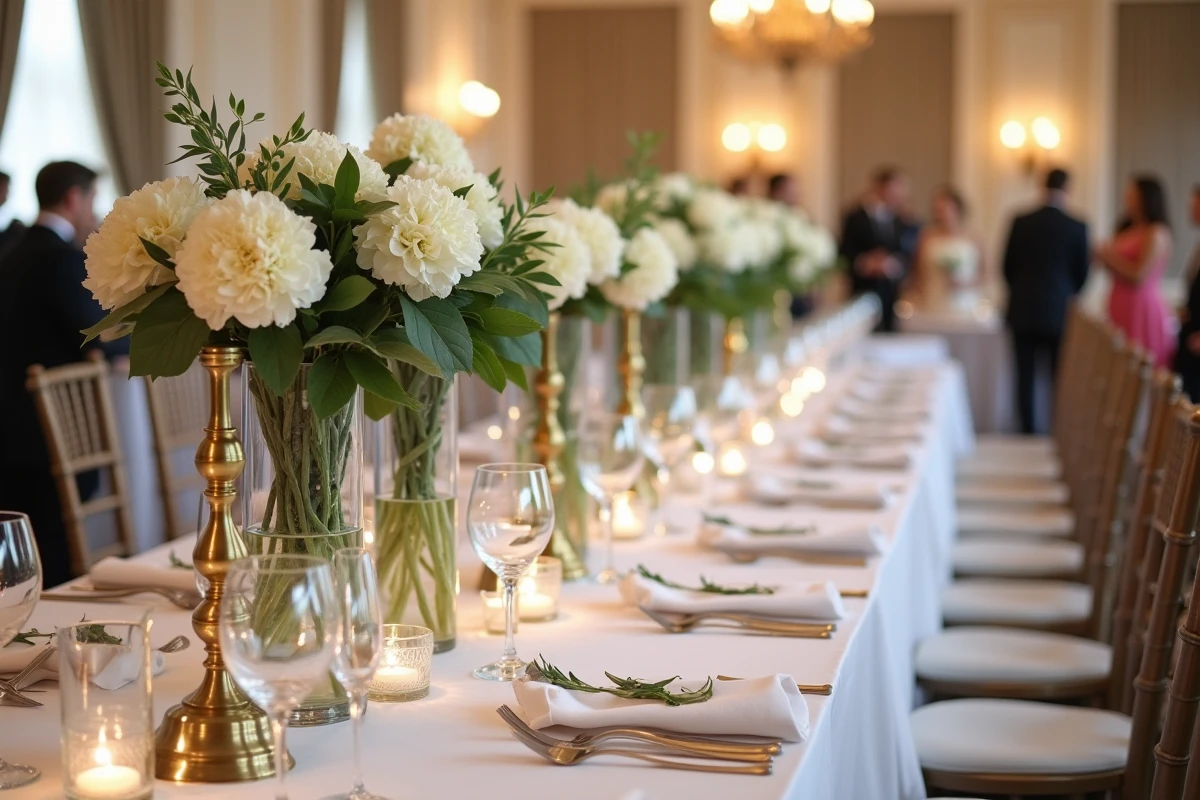
The alternative is to choose two or three priority items and allocate the majority of the budget to them. A couple who values gastronomy will invest in catering and reduce floral decoration. Another couple who values visual memories will focus their resources on a high-level photographer and videographer, even if it means simplifying the menu.
- Identify the two items that matter most to the couple before requesting a single quote
- Eliminate an entire item rather than cutting back on all (no DJ if a well-constructed playlist suffices, no videographer if photos are enough)
- Keep a real margin of maneuver, not just symbolic, on the total budget to absorb last-minute surprises
Personalized Secular Ceremony: Structure and Pitfalls to Avoid
The secular ceremony offers total freedom over content, duration, and tone. This freedom is also its main risk: without a clear structure, the ceremony can drag on or lose its thread.
An effective secular ceremony lasts between twenty and thirty-five minutes. Beyond that, guests’ attention wanes, especially outdoors in hot weather. The flow follows a simple arc: opening by the officiant, intervention by one or two close ones, exchange of vows, symbolic ritual, closure.
Speeches by Witnesses and Close Ones
Limiting the number of interventions to three or four avoids a catalog effect. Each speaker receives a time guideline (three to five minutes) and a main theme to avoid redundancies. Two moving speeches are better than six repetitive anecdotes.
The most common pitfall remains the lack of rehearsal. A read-aloud the day before, in the actual venue, allows for adjustments in volume, pace, and positioning relative to the guests. This simple test eliminates most awkwardness on the day.
The difference between an unforgettable wedding and a pleasant one rarely lies in the scale of resources. It is played out in the precision of choices: a format suited to the actual budget, a venue sized for the group, and two or three elements treated with real rigor rather than ten skimmed over.