In a world where the hectic pace of daily life can erode well-being, having an oasis of calm at home has become essential. Transforming an outdoor space, such as a garden or terrace, into a sanctuary of relaxation often proves to be costly. Fortunately, there are strategies to create a peaceful haven outside your home without draining your finances. By utilizing clever design tips, recycling materials, and getting hands-on, it is entirely possible to turn your outdoor space into a soothing retreat at a lower cost.
Designing a Functional and Affordable Outdoor Space
Designing your garden requires a clear and methodical vision. Cleaning the garden, an essential preliminary phase, includes weeding and mowing the lawn, thus preparing the ground for a radical transformation. Consider the existing layout as a foundation for the effective design of your space: the arrangement of already present elements, the intended flow, and the integration of new structures such as secondary pathways or a raised vegetable garden, ideal for small spaces and easy to maintain. The climate, by determining suitable plants, directly influences plant selection; favor perennials for their longevity and economic benefits in the long run.
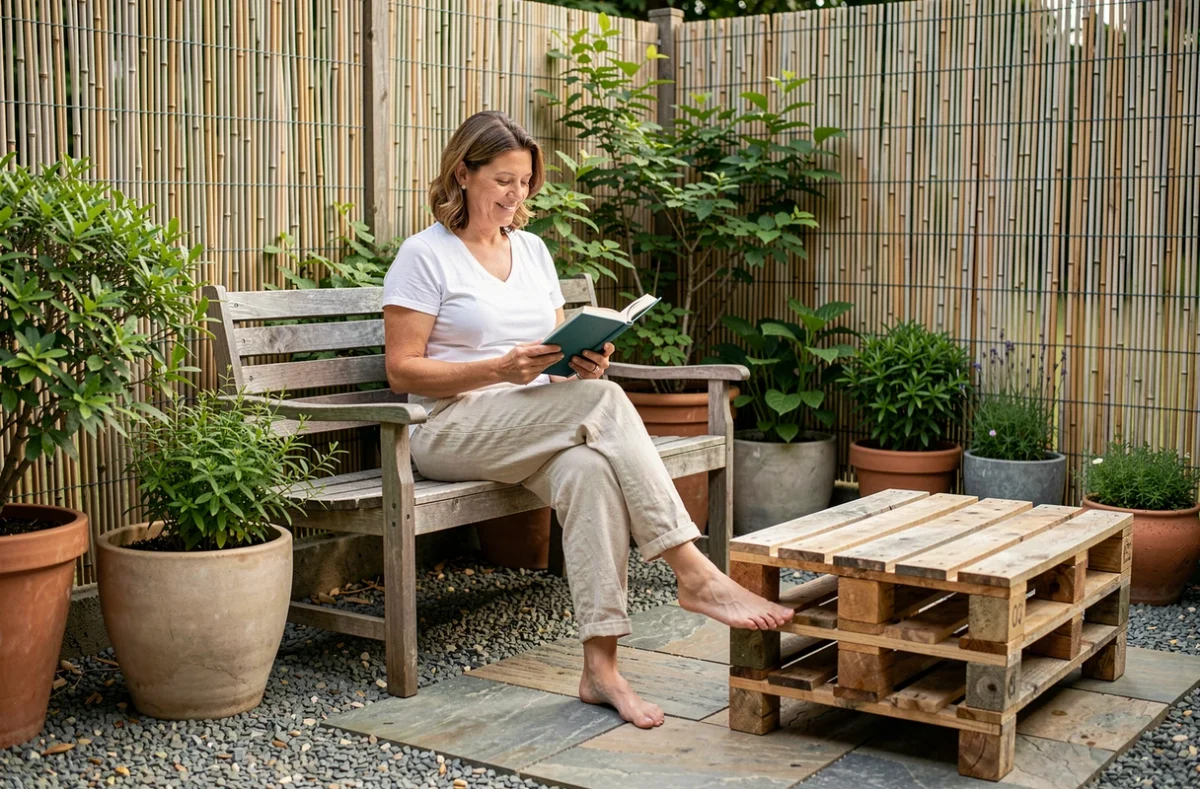
In order to understand how to create a budget-friendly zen garden, incorporate elements such as a well-maintained lawn, clean pathways, and a water feature, not forgetting the importance of a dining area to enjoy meals outdoors. Use recycled or local materials to build your features: stones, reclaimed wood, or pallets can be transformed into benches, planters, or even decorative fences.
The success of an outdoor design relies on the ability to create harmony between utility and aesthetics while respecting the defined budget. Once established, perennials reduce maintenance costs and fill the space with color year after year. A carefully studied existing layout allows for the optimization of every square meter, while the creation of defined zones, such as the vegetable garden and dining area, structures the space and makes it both functional and welcoming.
Using Natural Elements and DIY for a Personal Touch
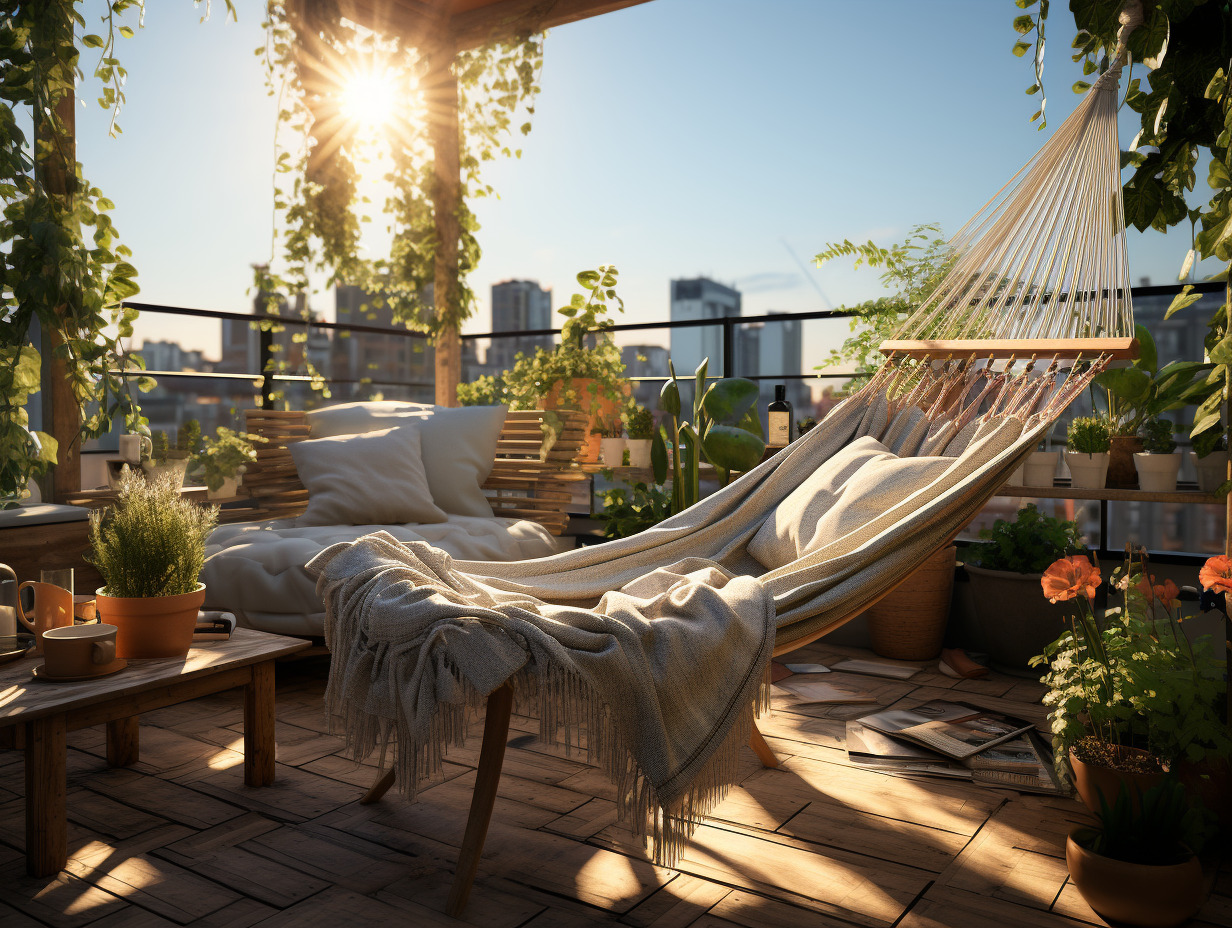
The style of your garden is defined by the use of natural materials and Do It Yourself (DIY) approaches, more popular than ever. Incorporate wooden screens to maintain your privacy or opt for hanging gardens that, beyond their aesthetics, optimize vertical space and bring a green dimension to your balcony or terrace. Assembling foldable garden furniture made from recycled pallets adds authenticity and flexibility to your outdoor living area. These elements, combined with carefully chosen decorative accessories, reflect your personality while respecting nature.
Creating a zen garden relies on simplicity and tranquility, with elements like a water basin or fountain that, by their presence, add a soothing sound dimension. Don’t forget to include a selection of discreet yet effective lighting, which not only creates a nighttime ambiance but also enhances the safety of your outdoor space. Strategically placed mirrors can visually enlarge the space and reflect natural light, thus reinforcing the effect of an open and welcoming environment.
Do not underestimate the impact of a wooden cabin, whether as an extension of living space, a remote work location, or a relaxation cocoon. Use reclaimed materials to erect this structure, which allows you to maintain an eco-friendly and economical approach. All of these DIY initiatives enable you to personalize your outdoor area according to your desires while keeping your budget in check and affirming your commitment to a sustainable environment.