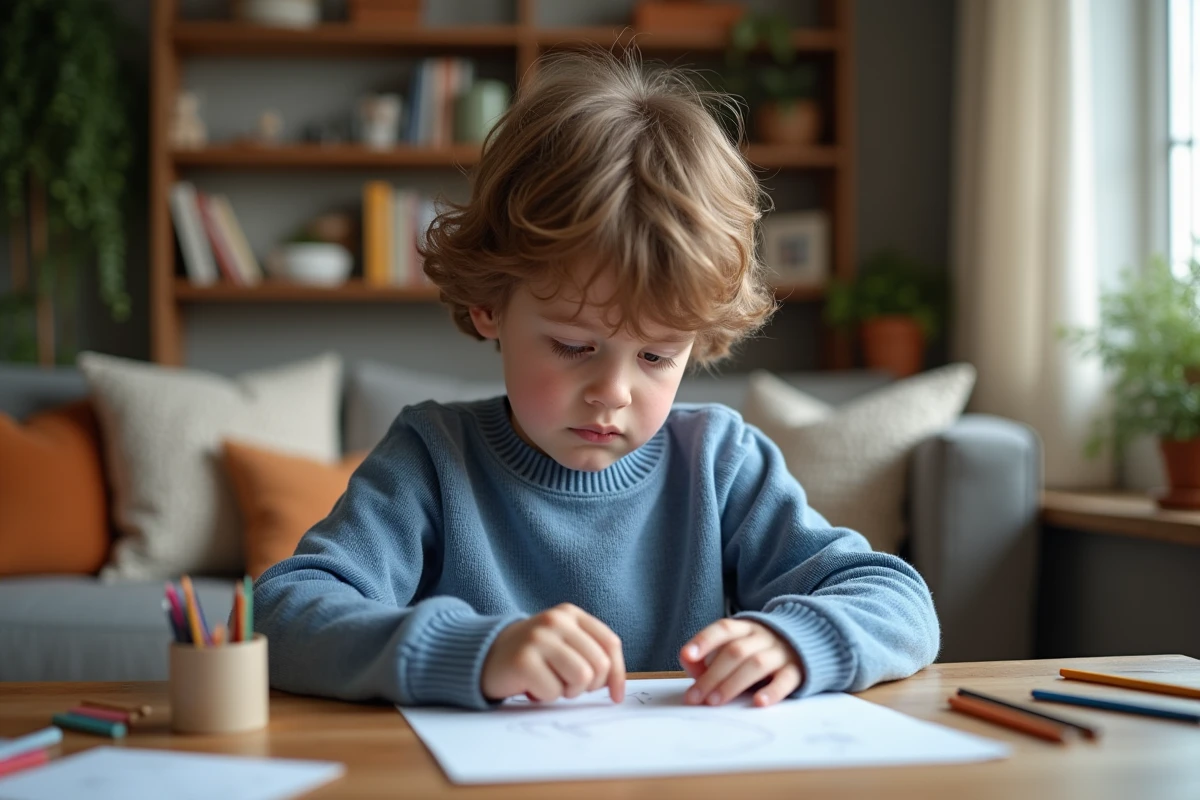
The persistent opposition to adult authority is not merely a passing phase in some cases. Disproportionate emotional and behavioral responses can become entrenched, disrupting family and school balance.
The frequency of diagnoses of oppositional defiant disorder has increased in recent years, revealing a complex and often misunderstood reality. In the face of this phenomenon, early identification of signals and the implementation of appropriate strategies become essential to support the child and their surroundings.
Understanding the Spirit Syndrome: when opposition becomes a warning sign in children
For some children, opposition does not just make occasional appearances in daily life. It settles in, takes root, and ultimately shapes the family and school climate. Explosive outbursts, repeated provocations, incessant arguments: these behaviors are not just mood swings. They sometimes fall under oppositional defiant disorder, also known as oppositional defiant disorder. In class or at home, the child multiplies challenges, systematically opposes, and pushes boundaries. For adults, fatigue accumulates, and solutions dwindle.
Oppositional behavior does not wait for adolescence to express itself. From primary school, some children refuse any instructions, turning every rule into a verbal battlefield. This disorder can stretch over time, span years, and open the door to social isolation or more pronounced conduct disorders later on.
How can one recognize that opposition exceeds the usual framework? It involves observing the intensity and regularity of reactions. An anger that takes over, a provocation that occurs almost daily, a tendency to blame others or to consistently position oneself as a victim are all warning signs. This oppositional defiant disorder requires particular attention, as it does not diminish without support.
For parents who wish to delve deeper into the subject, learning everything about Spirit syndrome in children involves consulting reliable resources that decode symptoms, diagnosis, and concrete strategies. Being informed is already a step towards breaking isolation and laying the groundwork for better support.
What signs should alert parents and educators?
Recognizing the manifestations of Spirit syndrome involves paying attention to several behaviors that gradually settle into daily life. Here are the signs to watch for to avoid overlooking a deeper disorder:
- Anger erupts over minor issues, and the child remains stuck in tension long after the conflict ends.
- Provocative behaviors follow one another: refusal to obey, systematic questioning, seeking power struggles with adults.
- Argumentation becomes overwhelming: every rule leads to endless discussions, every instruction is challenged.
- The child tends to blame others for their actions, positions themselves as a victim, and denies their involvement in difficulties.
When these behaviors repeat day after day, the cycle of opposition establishes itself. Observing the frequency, duration, and intensity of these reactions sheds light on the situation and allows for the consideration of a diagnosis of oppositional defiant disorder.
Reference adults—parents, teachers, educators—are on the front lines to spot these signals. Their ability to observe without judgment and to seek professional help at the first signs of doubt changes the game for the child and the family. It is also crucial to pay attention to the psychological state of the parents, often weakened by the repetition of conflicts and emotional exhaustion.
Concrete ways to support your child daily and find support
Calming daily life, restoring the relationship
When oppositional defiant disorder enters the family, the atmosphere can quickly become charged. The instinct sometimes pushes to harden the tone, to engage in a power struggle. However, the child’s emotional stability relies on a reassuring structure: clear rules, appropriate consequences, and unwavering consistency. Even in refusal, the child needs stable reference points and to know what is expected of them.
Some concrete approaches facilitate daily calm:
- Use positive reinforcement: acknowledge every effort to respect the framework or manage their anger, even if minimal.
- Make dialogue a priority to resolve conflicts, without succumbing to verbal escalation. A calm tone can defuse many crises.
- Welcome and articulate emotions: emotional management is learned through example, play, or discussion.
Seeking support, training, sharing experiences
The journey of parents is anything but smooth when faced with a constantly oppositional child. Surrounding oneself with support becomes essential for long-term endurance. Numerous resources support parental mental health: support groups, parenting workshops, guidance from experienced professionals. Turning to a specialist helps prevent burnout and also rebuilds the bond with the child.
Cooperation with the school and educators is invaluable. Implementing common strategies provides the child with educational consistency from one environment to another. A gradual, step-by-step approach allows each family member to regain their place and better navigate the storms that oppositional disorder can provoke.
Walking alongside a child in opposition means accepting that nothing is set in stone. But each small step, each moment of respite, shapes the possibility of a more peaceful future, for them and for those around them.