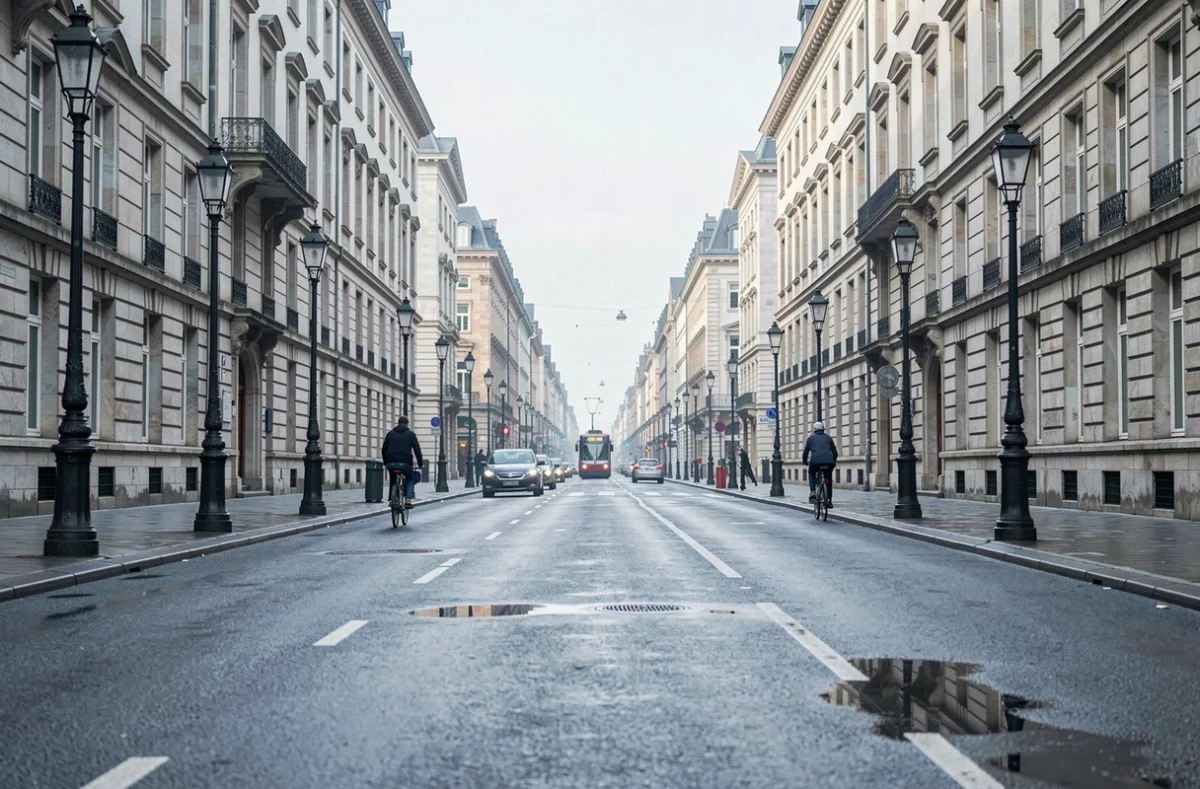
A Brussels commuter lost around 146 hours in traffic in 2025, six hours more than the previous year, with average evening speeds falling below 14 km/h. These figures from the TomTom Traffic Index raise a direct question: what time of day can you still make a short trip across Brussels without getting stuck in traffic, and does the answer apply to every route?
Travel times in Brussels by time of day
There are two weekday traffic peaks: between 7:30 and 9:30 a.m., then between 4:00 and 6:30 p.m. The evening peak is the busiest: on the Ring R0, congestion regularly continues past 7:00 p.m. Traffic is considerably lighter between these two periods.
| Time | Congestion level | Notes |
|---|---|---|
| Before 7:00 a.m. | Low | Free-flowing traffic on most routes |
| 7:30–9:30 a.m. | High | Morning peak, with a concentration of commuters |
| 9:30 a.m.–3:30 p.m. | Moderate | Best window during the day |
| 4:00–6:30 p.m. | Very high | The heaviest traffic peak of the day |
| 6:30–7:30 p.m. | High (Ring) | Residual congestion on the R0 |
| After 8:00 p.m. | Low | Clear roads |
This table reflects a weekly average. A 10 km trip that takes around 15 minutes in the middle of the morning can take twice as long during the evening peak. Anyone looking to drive around Brussels outside peak hours should aim for the 9:30 a.m.–3:30 p.m. window or set off before 7:00 a.m.

Ring road construction: why timing alone isn’t enough
Brussels is not a city where a fixed time slot guarantees a smooth journey. Infrastructure works, sometimes lasting for months, can radically change traffic conditions on a particular route.
Ring road exit 12 closure and work on Chaussée de Ninove
Construction at the Ring and Chaussée de Ninove interchange has led to the permanent closure of exit 12 (Kattebroek), along with closed slip roads and narrowed lanes scheduled to remain in place until April 2027. For drivers using this section of the R0, even setting off at 6:30 a.m. won’t make up for a closed slip road.
Disruptions at the Léonard interchange
The Léonard interchange, a key junction southeast of Brussels, is subject to occasional closures and road layout changes. The schedule for this work can sometimes change at the last minute: a closure announced for a public holiday may be postponed without notice.
The takeaway is simple: check traffic updates on the day of your trip before choosing when to leave. The Brussels Mobility website and real-time navigation apps such as Waze and Google Maps let you simulate a journey at a specific time and identify active disruptions.
- Check for roadwork alerts in the morning before you leave, not the night before: schedules can change.
- Enter your preferred departure time in Waze or Google Maps to get a realistic estimate for your journey.
- If your usual route is affected by long-term construction, try an alternative outside peak hours to see how much time you could save.
Adjust your journey in Brussels to the route you take
A driver crossing the Ring between Grimbergen and Groot-Bijgaarden faces a different situation from someone travelling from Uccle to the European Quarter. Reports from R0 users in the Grimbergen area indicate that traffic jams start forming as early as 8:00 a.m. and stop-and-go traffic begins around 4:00 p.m. on the return journey. An incident near the Vilvoorde viaduct can bring traffic to a standstill as far as Groot-Bijgaarden.
The European Quarter, meanwhile, follows an institutional calendar. Parliamentary sessions and European summits create traffic peaks that don’t align with typical rush-hour patterns. A Tuesday with a plenary session at 10:00 a.m. can be busier than a Friday at 5:00 p.m.
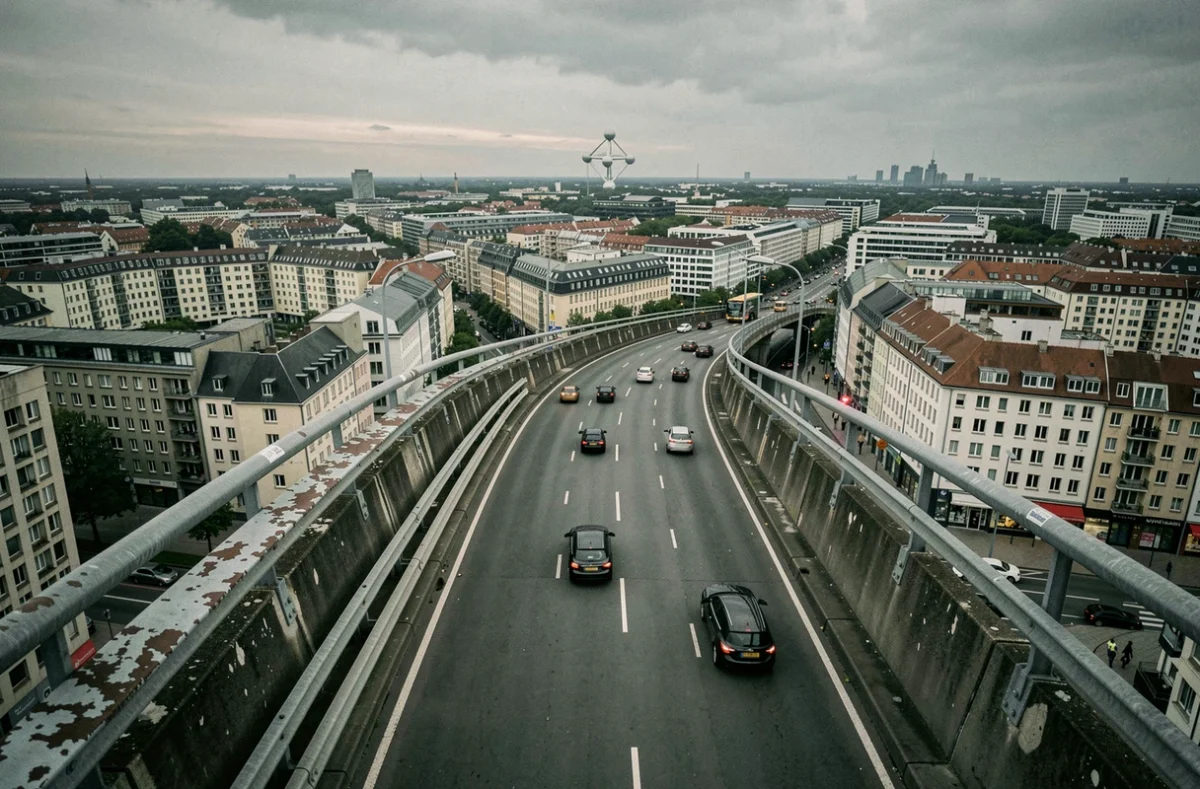
These differences between routes mean there is no one-size-fits-all time to travel in Brussels. The best time to leave depends on your exact route, not on a citywide average.
Switch to public transport during the busiest periods
When traffic jams become a regular occurrence on a particular route, the question is no longer when to leave, but which mode of transport to use. Since 2025, the STIB network has provided real-time updates on major unplanned disruptions, making it easier to decide at the last minute.
Public transport use is also increasing outside peak hours, suggesting that more and more Brussels residents are shifting their travel times. A metro or tram journey between 9:30 a.m. and 3:30 p.m. generally offers reliable service without the overcrowding of rush hour.
The most effective option is often a multimodal journey: drive to a park-and-ride facility on the outskirts, then take the metro or tram into the city centre. This approach avoids Brussels’ tunnels, where maintenance closures add another layer of unpredictability to road traffic.
Getting around Brussels: three factors to check before you leave
Choosing a time between 9:30 a.m. and 3:30 p.m. is still the basic recommendation, but it only works if you also check two things: the status of roadworks along your route and whether you can switch to public transport if there’s a disruption. A good departure time without checking that day’s roadworks is a gamble, not a strategy. Traffic congestion in Brussels can’t be solved with a single rule of thumb; it has to be managed one journey at a time.