Three out of four people in France bought or sold a second-hand item in 2025, according to a study by 60 Millions de consommateurs published in February 2026. This figure shifts the conversation around fashion trends: expressing your personal style every day no longer means buying new. Between second-hand shopping, repairs and resale, clothing habits are changing. The question is what this means in practice for building and updating a wardrobe.
New clothes, second-hand and ultra-fast fashion: the choices people in France are making
Recent data points to a shift. On the one hand, 74% of people in France bought or sold second-hand items in 2025. On the other, BPCE’s Consumer Observatory, cited by Les Échos in January 2026, reports a drop in spending at ultra-fast-fashion retailers after two years of sharp growth.
| Shopping channel | 2025–2026 trend | Impact on everyday style |
|---|---|---|
| Second-hand (Vinted, thrift stores, consignment shops) | Growing, now mainstream | Access to distinctive pieces and cuts that are hard to find new |
| Ultra-fast fashion (Shein, Temu) | Spending in France is falling | Less disposable turnover, greater need for durable pieces |
| Brands with seasonal collections | Stable, with a shift towards quality | Investing in wardrobe staples to wear for several seasons |
This table reflects a shift: personal style is increasingly built through careful selection and keeping clothes for longer, rather than accumulating more. Pieces that last across several seasons—a well-fitting pair of jeans, a structured coat or leather ankle boots—naturally become more valuable in a wardrobe that changes less often.
To explore current trends and find pieces that work with an existing wardrobe, Indiz’s fashion section offers curated selections by style and season.
Fashion pieces to keep, repair or resell: a decision-making guide
If the goal is to limit new purchases without giving up a cohesive wardrobe, every garment deserves a second look. Not all pieces have the same useful lifespan or resale value.
Clothes worth keeping for the long term
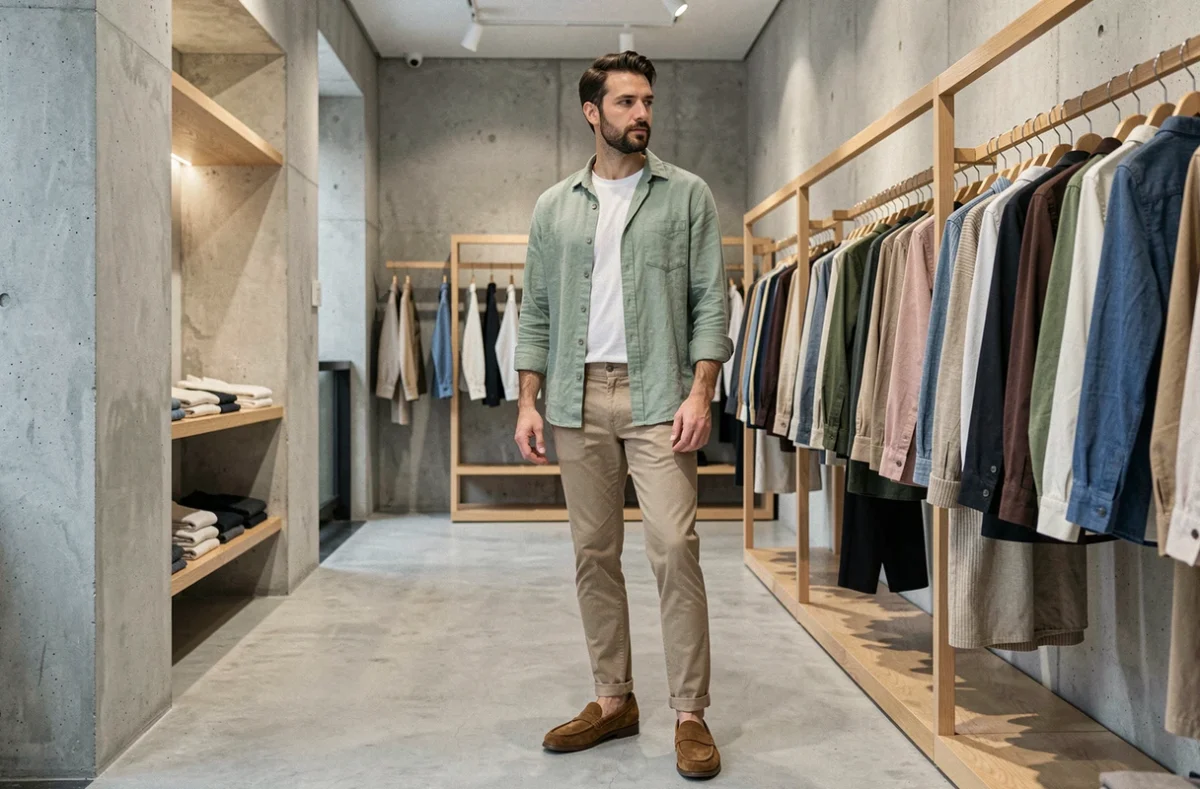
- Wool or heavyweight cotton trousers (chinos, pleated trousers): their cut changes little from season to season, and having the hem or waist adjusted by a tailor costs anywhere from a few euros to around twenty euros
- Raw denim or selvedge jeans: the fabric develops character and the colour changes over time, while straight-leg and slim-straight cuts remain wearable for years without looking overly trend-driven
- A wool coat or leather jacket: these statement pieces shape a silhouette more than any top, and their materials are easy to repair (lining, buttons, seams)
Pieces that resell well
Designer or recognisable-brand dresses, leather bags and lightly worn shoes tend to sell quickly on resale platforms. A garment with a legible label and fabric that does not pill will fetch a better price than an unbranded basic with no visible signs of quality.
What is not worth repairing or reselling
Thin synthetic garments (low-grade polyester, very lightweight viscose) with seams that come apart after a few washes are not worth taking to a tailor. It is better to take them to a textile collection point than leave them in a wardrobe where they will never be worn again.
The AGEC law and textile reuse: what they mean for your wardrobe
France’s AGEC law of 10 February 2020 established a clear framework for reusing and repurposing clothing. Extended producer responsibility (EPR) schemes fund initiatives dedicated to giving textiles a second life. In practice, this means a growing network of collection points and reuse centres that can put wearable clothes back into circulation.
These schemes are not just for activists. They change what is available: more good-quality clothes circulate outside the new-clothing market, making it easier to build a personal wardrobe without buying more from shops.
Everyday style: focus on three or four statement pieces each season
Autumn–winter and spring–summer trends come and go, but an everyday wardrobe rarely relies on more than a handful of key pieces. A cohesive look comes together around three or four garments worn in rotation with neutral basics.
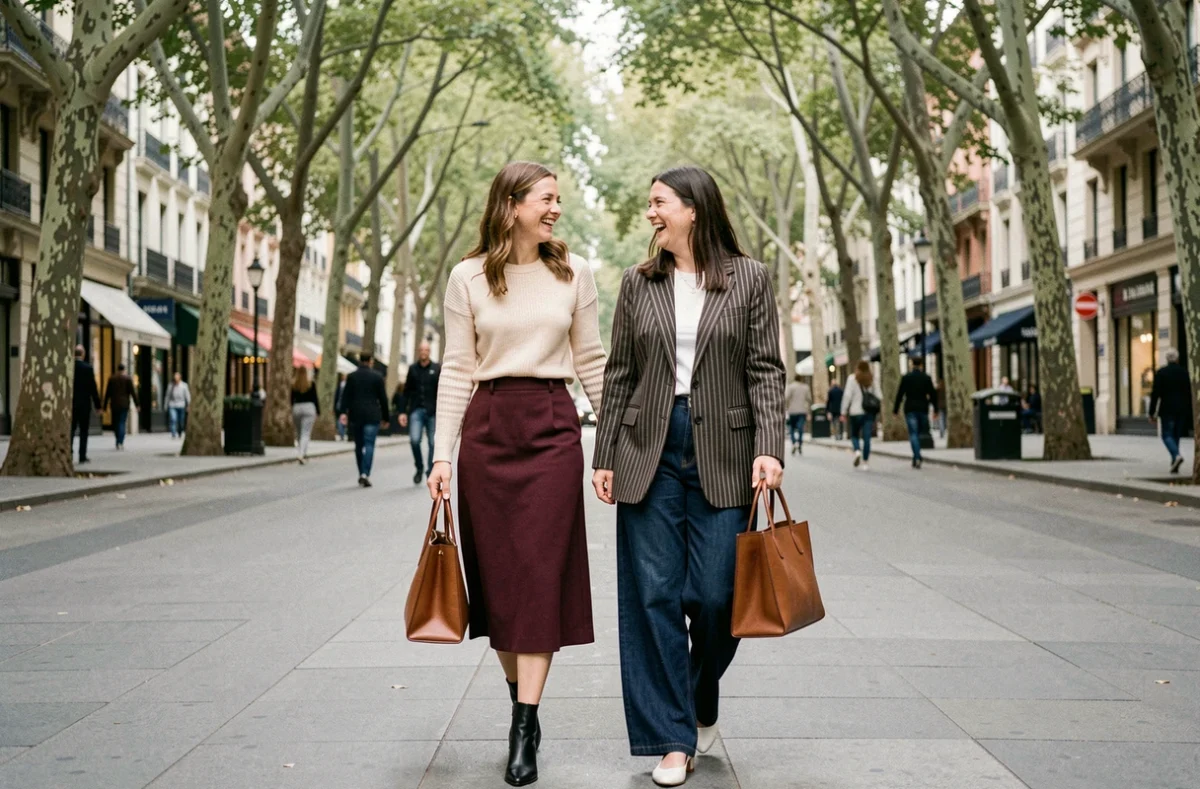
For autumn–winter 2026–2027, collections are embracing long coats, oversized knitwear and muted colours (burgundy, khaki, slate grey). Just one statement piece can anchor a look when the rest of the wardrobe is understated: a chunky-knit sweater with straight-leg jeans and ankle boots, for example, creates a polished silhouette with little effort.
The trap is trying to follow every microtrend (leopard print one month, velvet the next, a leather bomber the week after). That pace belongs to fast fashion, not to a confidently personal style. Expressing your style also means knowing when to ignore a trend that does not suit your body shape, usual colours or lifestyle.
The decline of ultra-fast fashion in France and the rise of second-hand shopping point to a different relationship with clothes: fewer purchases, more considered choices, and pieces that stay in the wardrobe because they are worn, not forgotten. This is probably the most important consideration for anyone looking to build a lasting everyday style.