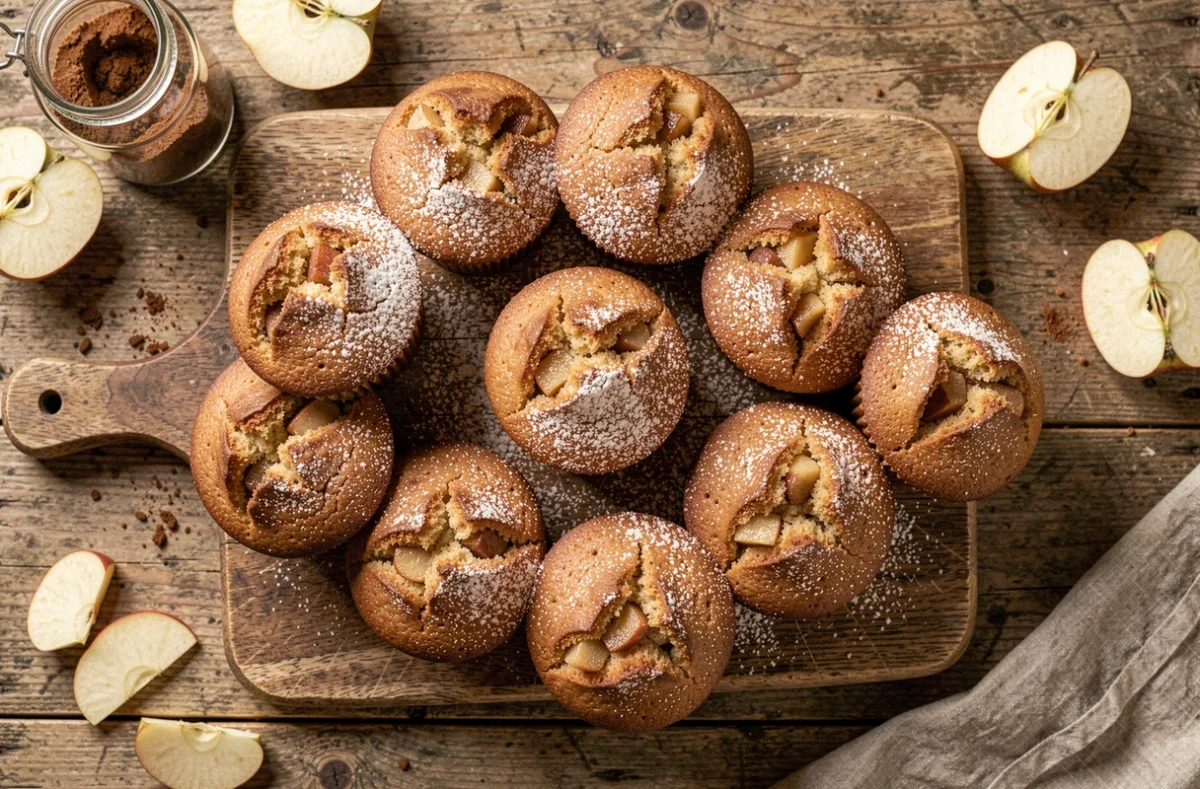
Apple muffins are among the most sought-after recipes in homemade baking, and the name Cyril Lignac is often associated with them. The expected result is a soft, fragrant individual cake, with melting pieces of apple. Achieving this texture requires a few precise actions that a simple list of ingredients does not explain.
Cyril Lignac’s Apple Muffins: A Nuanced Attribution
Several websites and Facebook groups associate Cyril Lignac’s name with a recipe for apple and cinnamon muffins. However, no official source confirms a recipe published by the chef under this exact title. The video found in the show Tous en cuisine concerns muffins with dried fruits, not apples.
This confusion is common in online cooking: fans adapt a base recipe, add apples, and the chef’s name remains attached to the result. The circulating recipe is a good working base, but it should be considered an inspired version rather than a signed recipe.
To find Cyril Lignac’s apple muffin recipe in its most common version, the basic ingredients remain classic: flour, butter, eggs, sugar, milk, and apples.
Flour and Gluten: The Technical Gesture That Changes Muffin Texture
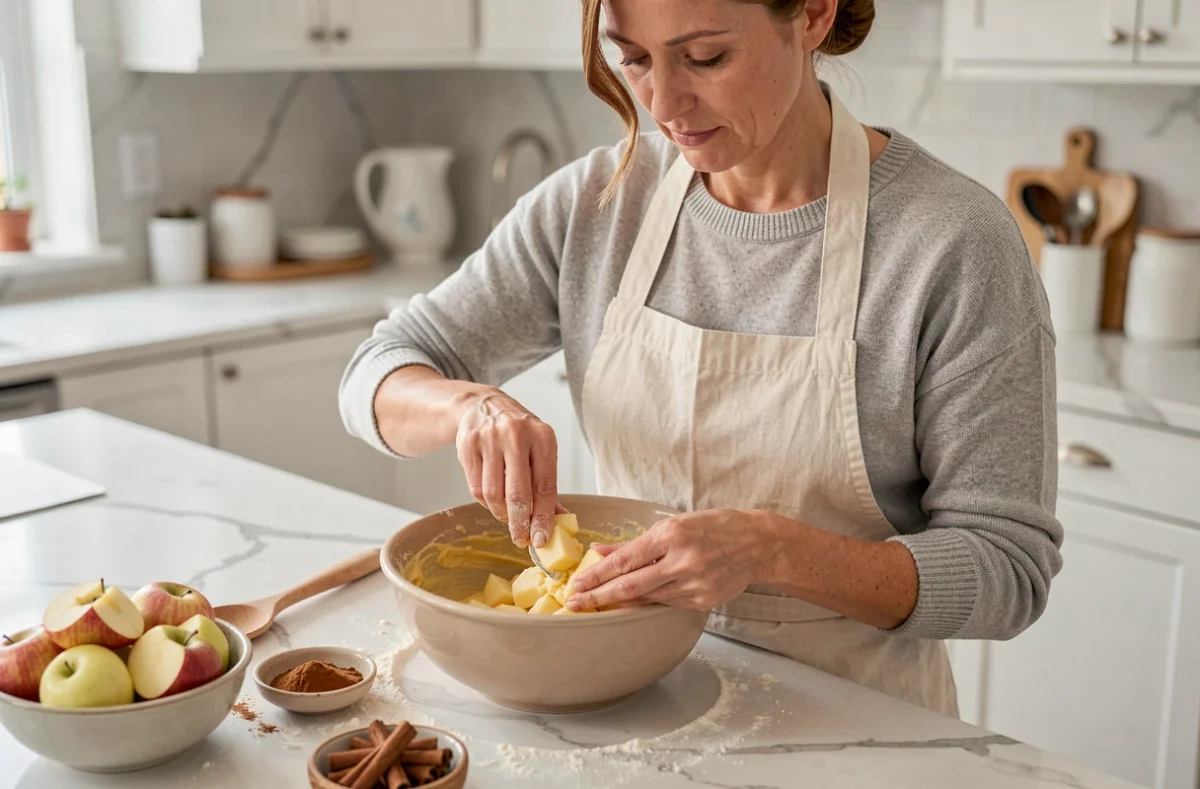
The majority of online recipes detail the ingredients and steps without emphasizing the most crucial gesture: mixing the flour with the liquid ingredients. This is where the difference between a soft muffin and a dense muffin is made.
Mix only until the flour traces disappear, not beyond. Excessive mixing of the batter develops the gluten network, resulting in a dense and elastic crumb instead of an airy texture. In practice, the batter should remain slightly lumpy. Visible small clumps of flour are not a problem: they disappear during baking.
This technique applies to all muffins, not just those with apples. The pieces of apple add moisture to the batter, making over-mixing even riskier: the batter absorbs the fruit’s water and becomes sticky if overworked.
Incorporating Apples Without Weighing Down the Batter
Cutting the apples into small cubes (about the size of a fingernail) allows for even distribution in each muffin. Pieces that are too large sink to the bottom of the mold during baking. Some variations suggest lightly flouring the cubes before incorporating them to keep them suspended in the batter.
Baking Muffins: Adjusting the Temperature to the Type of Oven
Most recipes indicate a temperature between 190 and 200 °C. This range works for a conventional convection oven (static heat). With a fan oven, reduce by about 15 °C to avoid two common problems: drying out the surface and browning too quickly, which masks an interior that is still raw.
Testing for doneness with the tip of a knife or toothpick remains the most reliable method. The blade should come out with a few moist crumbs, not liquid batter. Remove the muffins from the oven at this stage: the residual heat from the mold finishes cooking during the first minutes of resting.
- Conventional oven (static heat): maintain the temperature indicated by the recipe, usually around 190-200 °C
- Fan oven: reduce by about 15 °C to compensate for the hot air circulation that speeds up browning
- Rack position: place the mold in the center of the oven for even cooking, neither too close to the top heating element nor too close to the bottom
Cooling and Storing: A Step Often Neglected
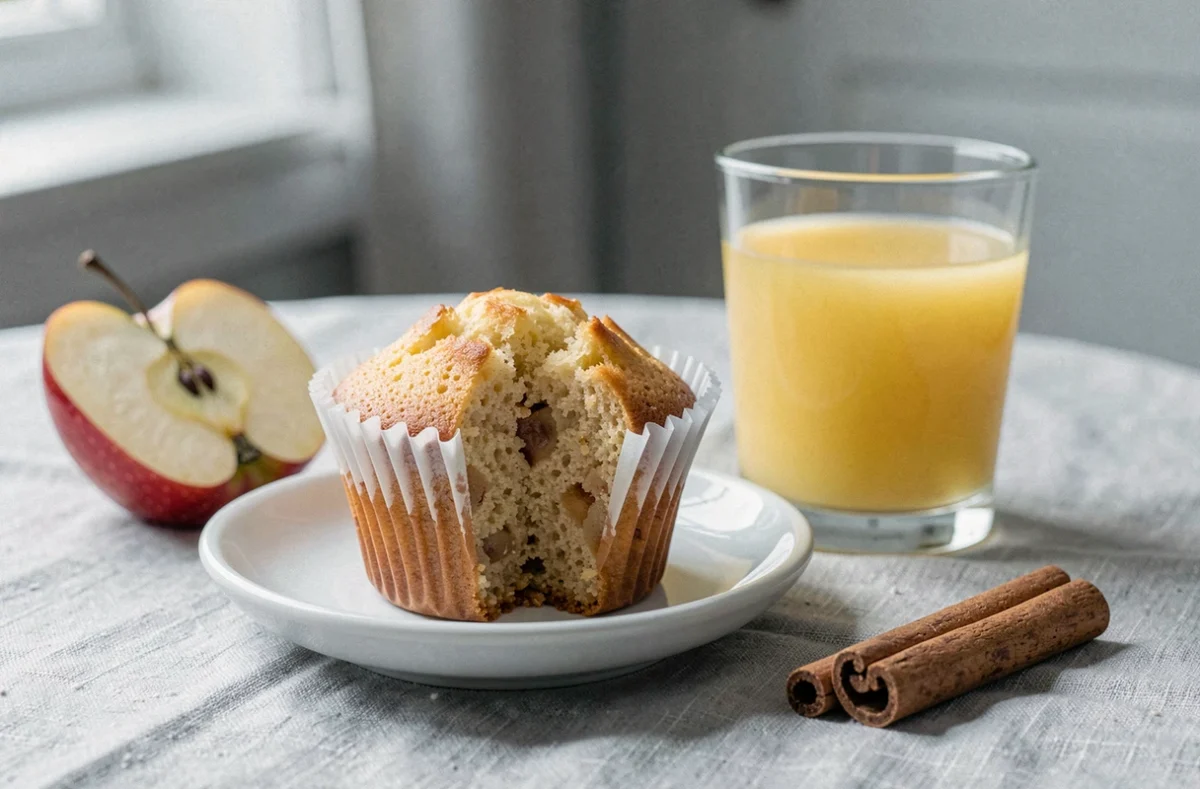
Taking the muffins out of the oven and immediately sealing them in a box is a common mistake. The trapped steam softens the surface and base of the muffins, producing an unpleasant spongy texture. Muffins should cool completely on a rack before any packaging.
This cooling takes about twenty minutes at room temperature. Quickly unmolding the muffins (after five minutes in the mold) speeds up the process and prevents condensation from accumulating under each cake.
Keeping the Moisture After the First Day
Once cooled, muffins can be stored in an airtight container at room temperature. They remain moist for two to three days if the container is well sealed. Beyond that, freezing is preferable: wrap each muffin individually in plastic wrap, then place them in a freezer bag.
To reheat them, a quick pass in a low-temperature oven restores crispness to the surface without drying out the crumb. The microwave also works, but it tends to make the texture a bit rubbery if the heating time exceeds a few seconds.
Common Variations Around the Apple Muffin Recipe
Cinnamon is the spice most often associated with apple muffins, but other combinations are worth testing:
- Apple and nuts: walnut halves add crunch and a flavor that pairs well with tart apple varieties
- Apple and oats: a more rustic version, with a slightly denser crumb that holds up better over the days
- Apple and yogurt (without butter): yogurt replaces part or all of the butter, resulting in a lighter mouthfeel without sacrificing moisture
The choice of apple variety influences the final result. Apples that hold up well during cooking keep their shape in the muffin, while softer varieties turn into puree and mainly add moisture to the batter.
The apple muffin recipe, whether directly attributed to Cyril Lignac or freely inspired by his bases, relies on simple but strict principles. Minimal mixing of the batter, the correct oven temperature, and complete cooling before storage contribute more to the final result than any secret ingredient.