Traceable materials, structured reused furniture, European regulations redefining sustainability: this year’s decor trends are measured as much by concrete commitments as by color palettes. What criteria truly distinguish the innovations that transform interiors from those that remain cosmetic?
ESPR Regulation and Digital Passport: What Changes for Furniture
The European ESPR regulation is gradually extending its requirements for sustainability, reparability, and recyclability to many physical products, including furniture. For consumers, this means future access to much more detailed information about the composition and lifecycle of each piece of furniture, thanks to digital product passports.
This traceability directly alters the criteria for choice in decoration. A sofa or table is no longer judged solely on style or price, but also on its ability to be repaired and recycled. Manufacturers anticipating these obligations are already offering enhanced product sheets, mentioning the origin of materials and end-of-life options.
Meanwhile, following the latest decor trends on News Déco helps identify brands that integrate these regulatory requirements into their catalog long before digital passports become mandatory across the market.
Reuse and REP Furniture Sector: Comparison of Supply Channels
Reuse in decoration is no longer reserved for treasure hunters. The specifications for the 2024-2029 REP furniture sector strengthen the goals of repair, reuse, and second life for furniture in France. In 2025, Ecomaison supported 155 projects and 740 structures in the social and solidarity economy, a sign that this sector is professionalizing.
| Supply Channel | Material Traceability | Available Style Range | Average Price Compared to New |
|---|---|---|---|
| New Furniture (traditional manufacturer) | Variable, improving with ESPR | Wide, standardized catalog | Reference |
| Reuse via ESS structures | Documented (REP sector) | Heterogeneous, unique pieces | Significantly lower |
| Hotel Furniture Sales | Known (verifiable origin) | High-end, homogeneous lots | Lower, variable based on condition |
| Flea Markets and Secondary Market | Rarely documented | Very variable | Variable |
Sales of furniture from Parisian hotels, organized in June 2026, illustrate how hotel reuse is becoming a full-fledged decor channel. Here, you can find professional-quality furniture designed to withstand intensive use, offered at prices well below the new market.
Why Structured Reuse Has the Advantage
The difference between treasure hunting at a flea market and buying through a REP structure lies in documentation. Pieces from the REP sector benefit from information about their composition and condition, making the purchasing decision easier. In contrast, the traditional secondary market rarely offers this level of detail.
For a complete decor project, combining traceable new furniture with documented reused pieces allows for a cohesive interior without sacrificing material quality.
Natural Materials and Earthy Colors: The Data Behind the Trend
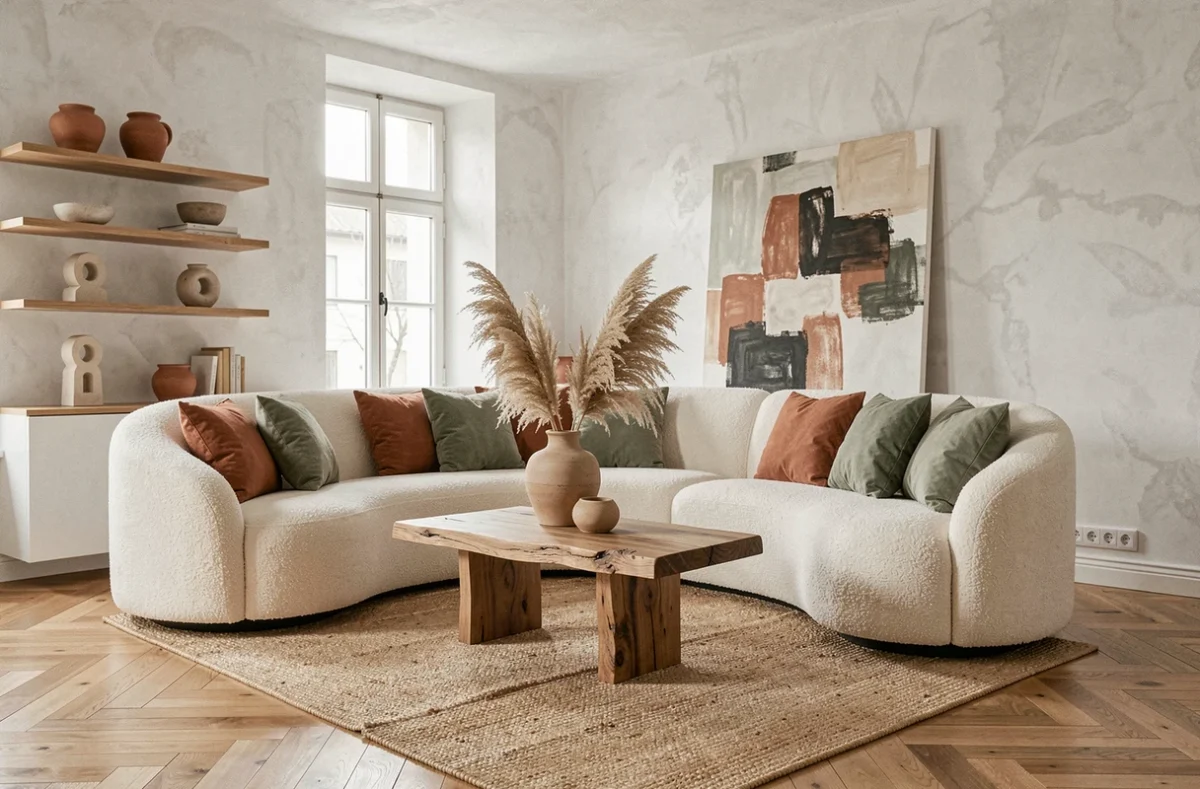
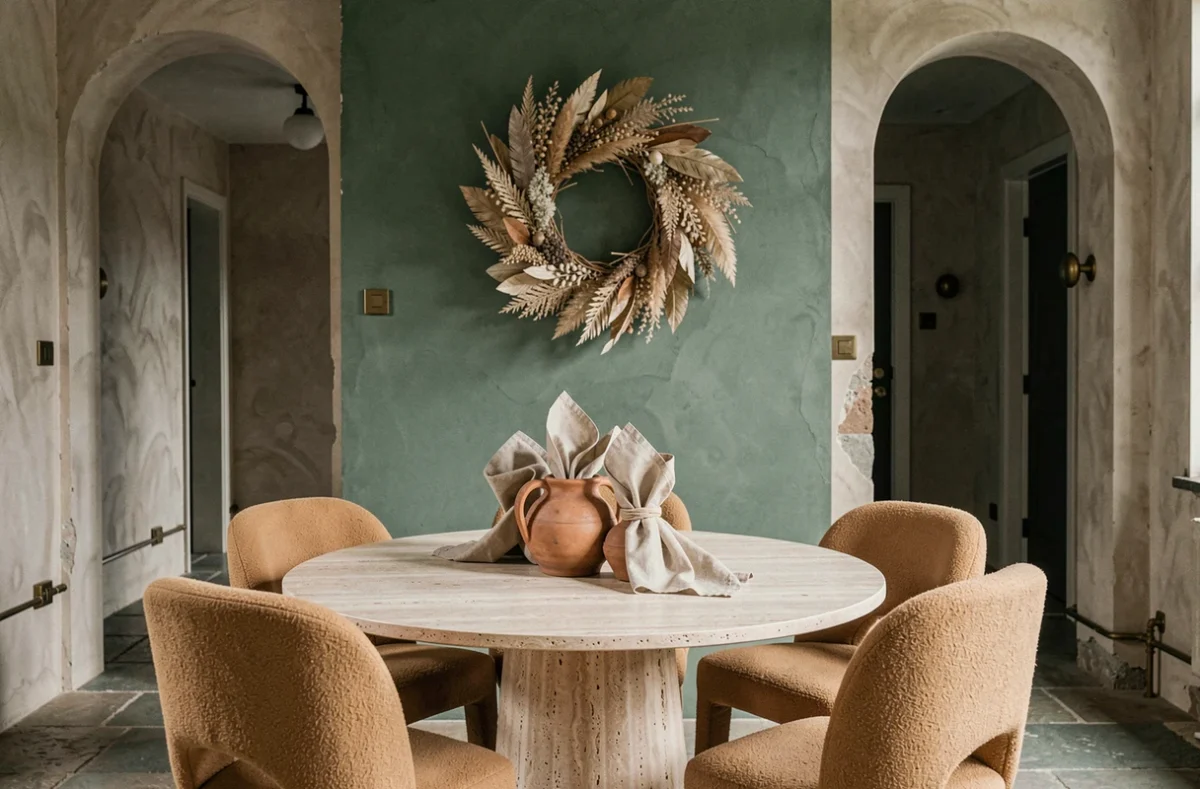
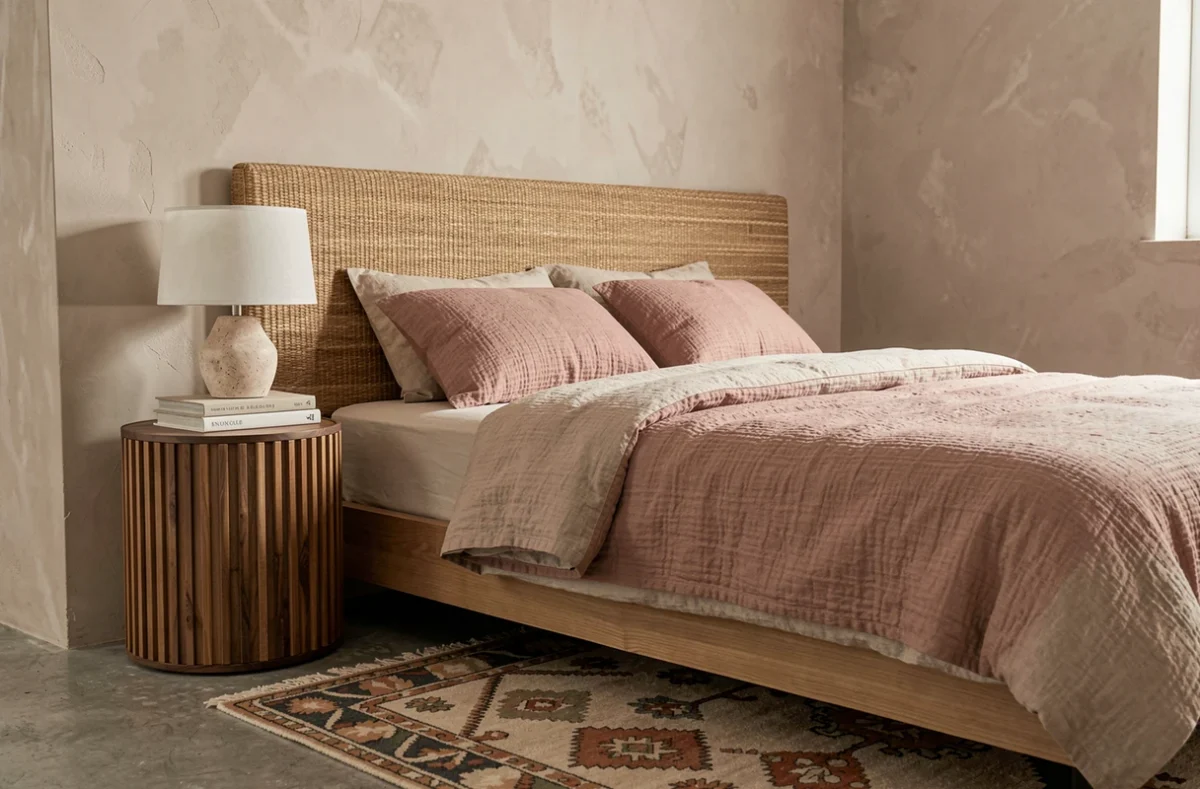
Wood, linen, stone: these materials dominate interiors this year. Discussions on specialized forums and editorial selections converge on the same observation. The return to natural materials structures the majority of decor choices, from wall coverings to furniture.
This convergence is not a matter of aesthetic chance. It responds to a dual requirement:
- Natural materials more easily fit into the future recyclability obligations imposed by the ESPR regulation, reassuring buyers concerned about sustainability.
- Wood, linen, and stone age better than synthetic materials, reducing the need for replacement and aligning with the goals of the REP furniture sector.
- Earthy colors associated with these materials (beiges, ochres, muted greens) create calming spaces, in line with the search for well-being that has been guiding interior decoration for several years.
Two Coexisting Decor Axes
Trend analyses for this year show two directions. The first favors creativity, with interiors borrowing from the codes of art galleries: sculptural furniture pieces, bold colors, and mixed styles. The second focuses on simplicity and comfort, with clean decorations where each piece of furniture has a clear function.
These two axes do not necessarily oppose each other. A living room can incorporate a hotel reused piece as a strong element, surrounded by simple wooden and linen elements. The decision is made piece by piece, based on the actual use of each space.
Eco-design and Aesthetics: A Framework for Choosing Furniture
In the face of the proliferation of labels and marketing speeches, a few concrete criteria allow for distinguishing a truly sustainable piece of furniture from a product dressed in greenwashing.
- Check if the manufacturer mentions the precise composition of materials and not just a generic term like “solid wood” without specifying the species.
- Look for information on reparability: available spare parts, disassemblable structure, replaceable finishes.
- Favor brands that anticipate the digital product passport by already publishing lifecycle data.
- Compare the real cost over time: a more expensive but repairable piece often costs less than a cheap piece replaced every three years.
Eco-design is becoming as determining a choice criterion as aesthetics. Manufacturers that publish clear data on the sustainability of their products stand out from those relying solely on trendy visuals.
This year’s decor trends can thus be understood on two levels: the visible surface (colors, materials, styles) and the regulatory infrastructure that frames them. The furniture that will endure in interiors as well as in catalogs is the one that meets both.