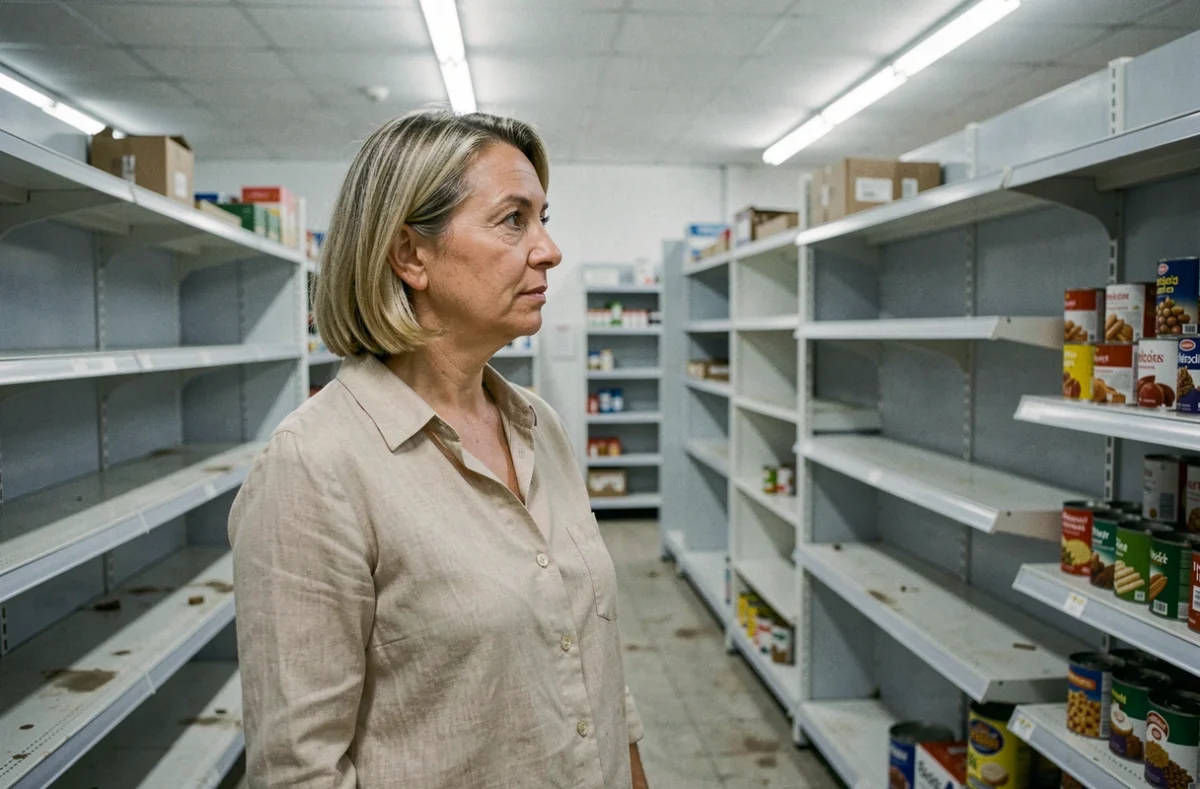
The drought of summer 2026 has rekindled concerns about food supply in France. Several agricultural sectors are reporting lower harvests, rising prices, and tensions over certain fresh products. The question of a widespread food shortage has re-entered public debate, driven by warnings from distributors and agricultural unions.
The term “shortage” encompasses very different realities depending on whether we are talking about temporarily empty shelves or a lasting break in the food supply chain. Understanding where the real vulnerabilities lie allows us to distinguish between cyclical tensions and structural risks.
Drought 2026: which agricultural products are truly under pressure
The scorching summer of 2026 hit vegetable crops and some major field crops hard. According to La Dépêche, salads, leeks, and potatoes are among the hardest-to-find fruits and vegetables this fall. The storage potato appears to be a particularly vulnerable product for autumn 2026, with French production showing a significant decline over the past year according to estimates from Agreste, the statistical service of the Ministry of Agriculture.
UFC-Que Choisir has documented record inflation on fruits and vegetables following this scorching summer. Tomatoes, salads, and several seasonal vegetables are experiencing noticeable price increases. The most likely consequence remains a tighter supply and higher prices rather than a permanent disappearance of products from the shelves.
Overall supply has been maintained thanks to shipments from Rungis and occasional imports. Several analyses published regarding the risks of food shortages in France highlight that the diversity of supply sources acts as a buffer, even when national production declines.
Forage deficits and animal sectors: the climate transmission chain
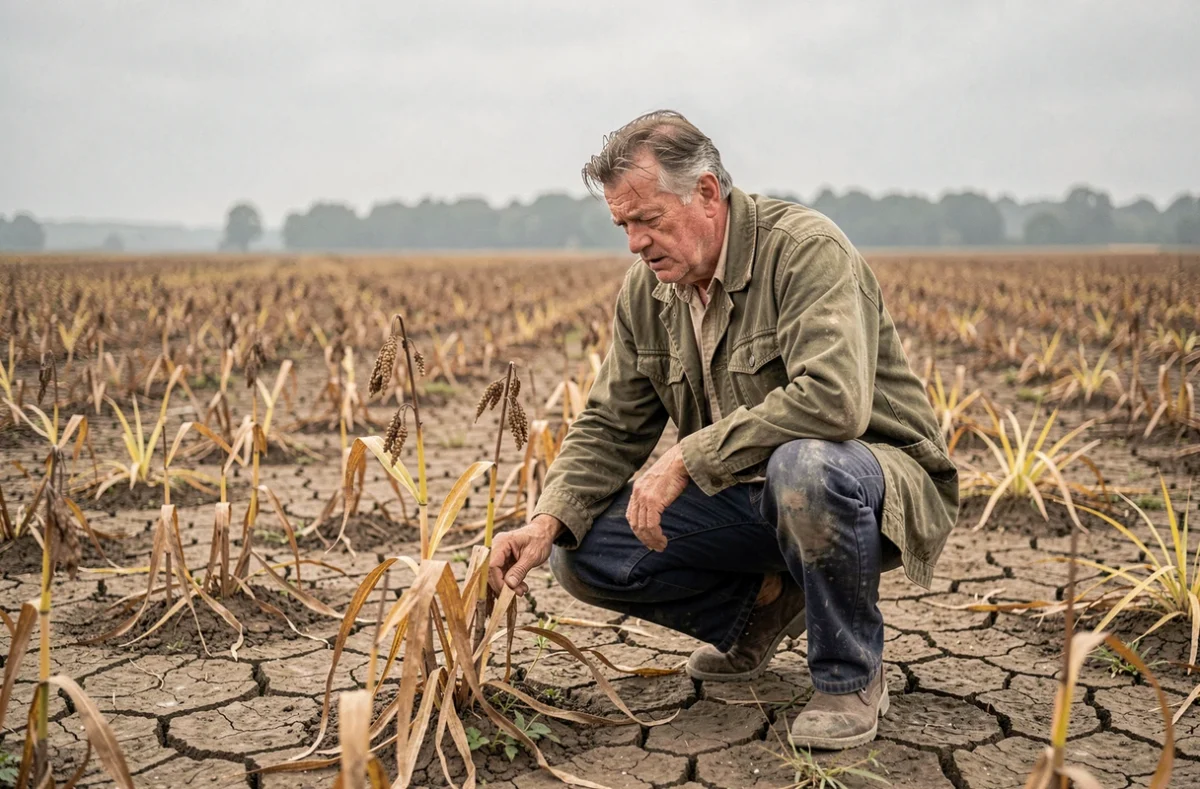
The link between drought and food does not only pass through fruits and vegetables. Forage deficits are affecting several French regions and are impacting milk and meat production. When grass is lacking in pastures, farmers must buy forage or grain at higher prices, which reduces their margins and may push them to reduce their livestock.
Egg producers are also facing difficulties related to the availability of corn for hens. This transmission chain (drought, forage, livestock, animal products) illustrates how a climatic episode can spread to sectors that are not immediately perceived as exposed.
The most exposed animal products
- Milk, whose production directly depends on the quality and quantity of forage available in grazing farms
- Eggs, reliant on the price of corn that is part of the feed for laying hens
- Beef, as farmers facing excessively high forage costs sometimes accelerate culling, creating a temporary surplus followed by a scarcity
Food shortage in France: structural risk or market tensions
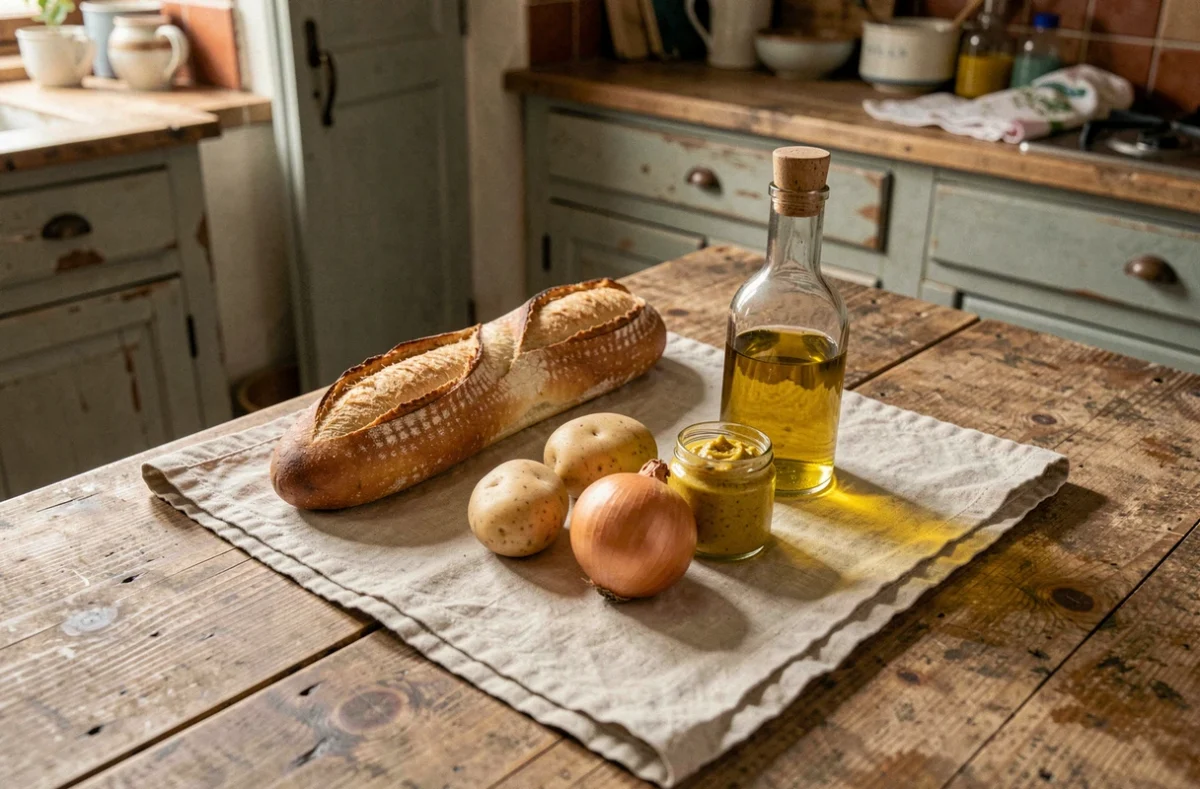
The episodes of empty shelves that France has experienced in recent years (mustard in 2022, sunflower oil during the Russo-Ukrainian conflict) were due to targeted logistical or geopolitical disruptions. The situation in 2026 is different: it stems from a climatic hazard affecting several sectors simultaneously across the national territory.
The Court of Auditors recently redefined the state’s strategy regarding food security, pointing out weaknesses in planning in the face of repeated climatic shocks. The problem is not the absence of food but the ability to absorb increasingly frequent episodes without prices becoming prohibitive for part of the population.
Imports and sovereignty: the limits of the safety net
When national production declines, imports compensate. This mechanism worked in the fall of 2026 for fruits and vegetables. However, it relies on a fragile assumption: that supplying countries do not face the same climatic constraints at the same time.
Simultaneous heatwaves in Southern Europe weaken this reliance on imports. The safety net works as long as crises remain geographically staggered.
Pleinchamp notes that declining harvests are already fueling fears of increased dependence on imports. Field reports vary on this point: some regions are managing thanks to irrigation, while others are facing heavy losses.
What distinguishes tension from a shortage
- A tension results in price increases and smaller sizes for certain common products
- A shortage implies the lasting unavailability of a product, a situation that has not materialized nationally in 2026
- The threshold between the two depends on the duration of the climatic episode and the ability of sectors to adapt from one season to the next
France is not facing a food shortage in the strict sense. What it is confronting is a gradual erosion of its production capacity in the face of increasingly hot summers. Potatoes, milk, and field vegetables will be the first indicators to watch in the coming months.
The real issue is not whether the shelves will be empty tomorrow, but how long the current system can hold without structural adaptation of agriculture to the new climatic conditions.